UF Institute of Food and Agricultural Sciences Extension logo
Give      University of Florida
Resources
  • Extension Water Programs
  • Soil, Water, and Ecosystem Sciences
  • Directory
  • Campus Map
Toggle Search Form
GIVE UNIVERSITY OF FLORIDA
  • HOME
  • About Wetlands
        • Types of Wetlands
        • Wetland Wildlife
        • Wetland Soils
        • Wetland Vegetation
        • Ecological Challenges
        • Protection & Preservation
  • Wetlands Near You
  • News & Research
  • Education
  • Contact Us

Florida Wetlands Extension Program

Florida Wetlands Extension Program

Mangrove Swamps

Florida is home to approximately 2,700 square kilometers of this dominant subtropical coastal ecosystem. Florida's mangrove swamps are concentrated along the southwest coast, where the Everglades and Big Cypress Swamp drain to the Gulf of Mexico. Mangroves extend up to 30 miles inland on the southwest coast and spread along the more northern coasts (north of Cape Canaveral on the Atlantic Coast and north of Cedar Key on the Gulf Coast).

Development has led to the destruction of mangrove ecosystems in Florida, so now they are protected. It is illegal to remove mangroves from the shoreline.

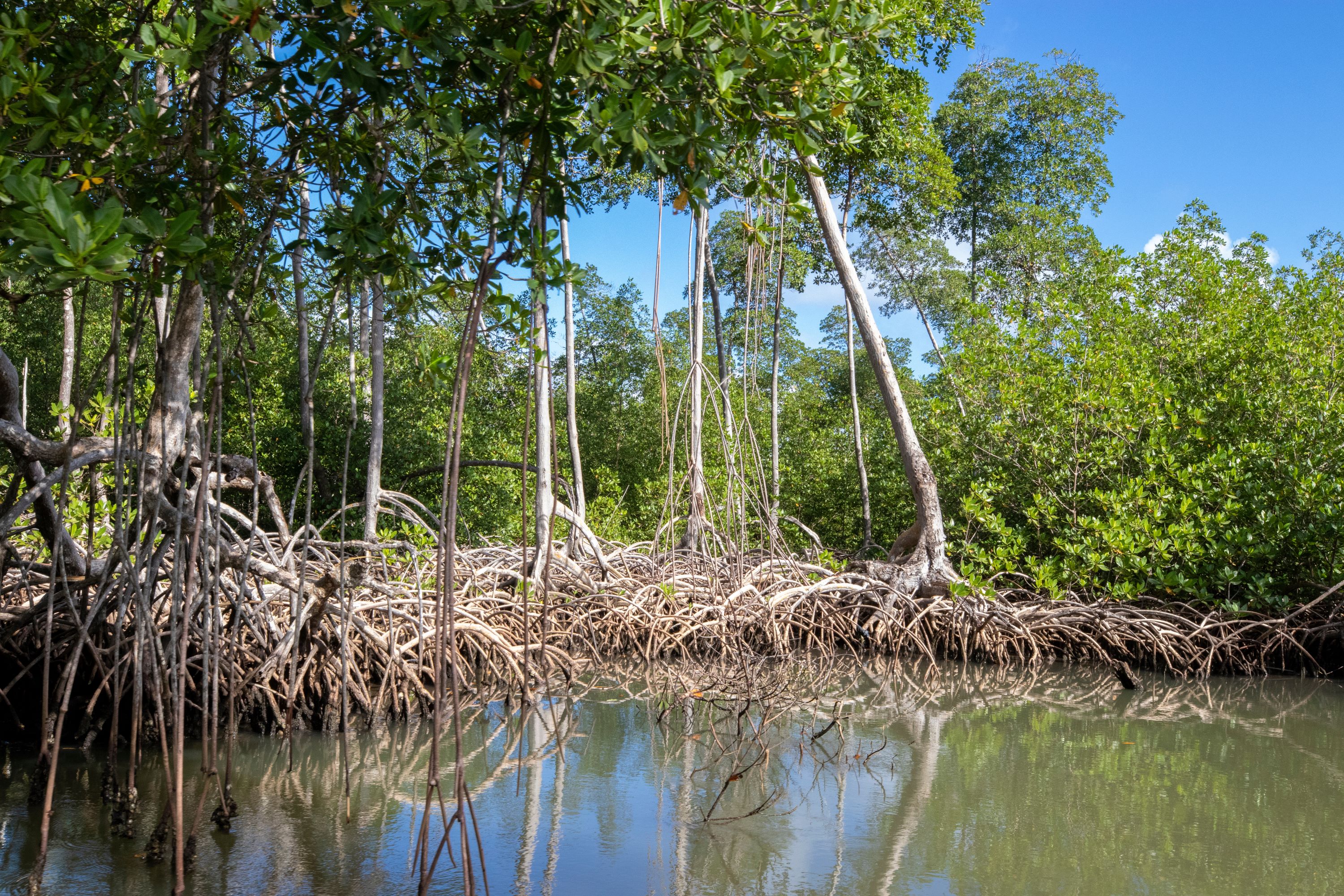
A typical mangrove swamp in Florida with water in the foreground and tall mangrove trees in the background at the water's edge.

Mangrove vegetation: Three of the 10 known mangrove species dominate Florida's mangroves: red mangroves, black mangroves, and white mangroves. Red mangroves have dense roots and are found along coastal edges that face the sea. Black mangroves are most common in hammock wetlands and basin swamps. A mangrove understory contains mangrove ferns, but few other species can survive the shady, high salinity conditions.

Mangrove wildlife: While species diversity depends on the vegetation present, a wide diversity of wildlife is typical in mangrove ecosystems. Florida mangroves are home to 220 fish species, 181 bird species (including the Wood Stork, White Ibis, Roseate Spoonbill, cormorant, Brown Pelican, egrets, and herons), 24 reptile and amphibian species (including alligators, crocodiles, and turtles), and 18 mammal species (including bears, wildcats, pumas, and rats). Filter feeders (especially barnacles, coon oysters, and the eastern oyster) are prominent species in marsh swamps. They attach themselves to mangrove stems and prop roots because they filter organic material from the tide. Crabs are another important mangrove species, as they help maintain biodiversity. Crabs burrow in the sediments, prey on mangrove seedlings, facilitate litter decomposition, and help convert detritus energy to the ecosystem's birds and fish.

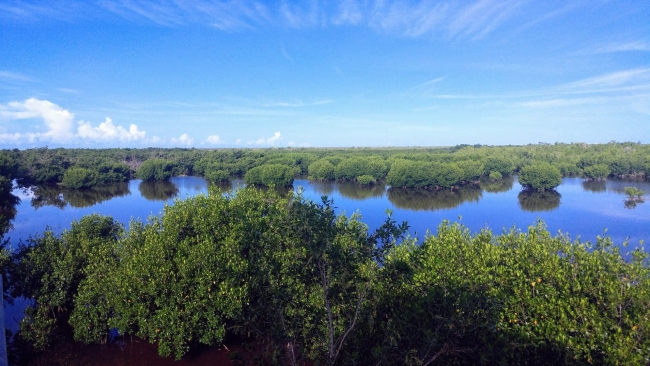
Well-known mangroves: With an area of about 600 square kilometers, Florida's Ten Thousand Islands is one of the world's largest mangrove swamps. Much of its initial area was reduced by development, which led to mangrove conservation laws.

Visit: Ten Thousand Islands National Wildlife Refuge protects important mangrove, marsh, and tropical hardwood hammock habitats in Southwest Florida.

A decorative image showing a landscape view of Ten Thousand Islands, Florida.

Mangrove Habitat, Jess Sutt/USFWS, Public Domain, https://www.fws.gov/media/mangrove-habitat

University of Florida Logo
Contact

Feedback
Florida Wetlands Extension Program
Dept of Soil, Water, & Ecosystem Sciences, 2181 McCarty Hall A, PO Box 110290, Gainesville, FL 32611-0290
(352) 294-3115

Land Grant Mission
  • Teaching
  • Research
  • Extension
Information
  • Ask IFAS (EDIS)
  • UF/IFAS Experts
  • UF/IFAS Blogs
  • UF/IFAS Bookstore
Policy
  • Accessible UF
  • EEO Statement
  • IFAS Web Policy
  • SSN & UF Privacy
  • Analytics (Google Privacy)

© 2025 University of Florida, IFAS Last Modified:Wed, 26 Mar 2025 13:43:34 EDT