Wetland Vegetation
Not all plants can survive in wetland ecosystems. Wetland habitats, with their high water levels and increased salt concentrations, are too harsh for many plants. Most organisms that thrive in these environments only do so with the help of special physiological and morphological adaptations.
Common Characteristics of Wetland Plants
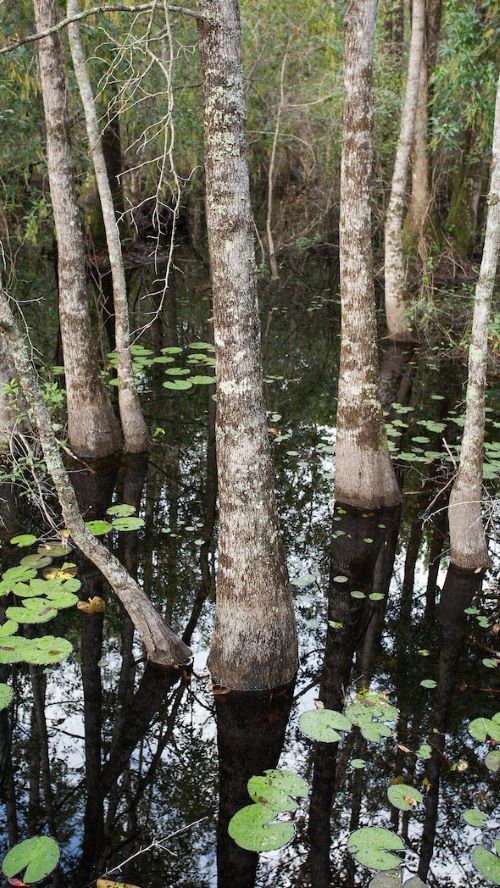
buttressed tree trunk -- these tree trunks swell out at the base for additional support in the water. (examples: bald cypress, water tupelo, swamp blackgum)
adventitious roots and shallow root systems -- roots grow near the surface where they can obtain oxygen (examples: mangroves)
pneumatophores -- modified root systems, sometimes above ground, to increase respiration.
floating leaves -- leaves with a thick cuticle (skin) to prevent water penetration (examples: lily pads)
floating stems -- stems with large internal air spaces that allow plants to root in shallow water and float
inflated leaves, stems, roots -- spongy tissues in leaves, stems and roots provide buoyancy and an oxygen reservoir (examples: herbaceous plants, including cattails, bulrush)
hypertrophied venticals -- large pores on plant stems make oxygen exchange easier
prolonged seed viability -- seeds will learn for 20 years so they can postpone germination until a wet area dries and then they are exposed to air