
Biochar for soil and environmental management
Benefits and challenges of land-application
Biochars are obtained through pyrolyzing biomass at temperatures above 300°C in the absence of oxygen. Degraded, dry lands and soils with poor fertility and low organic matter can immensely benefit from biochar amendments. In documented cases:
- biochars have improved nutrient and water-holding capacities,
- increased fertility and productivity, and
- improved crop management efficiency.
Additional benefits come from biochar's ability to sorb contaminants, including inorganic and organic pollutants in the soil and leaching waters, thus improving soil and water quality. Using biochar as a soil amendment can help sequester stable carbon in soils and combat climate change. However, responses to biochars may depend on the type of biochar used and the specific characteristics of that biochar. Because biochar characteristics determine its suitability for specific agronomic or environmental purposes, biochar production must be tailored to address such specific needs. For more information, visit: Introduction to Biochars.
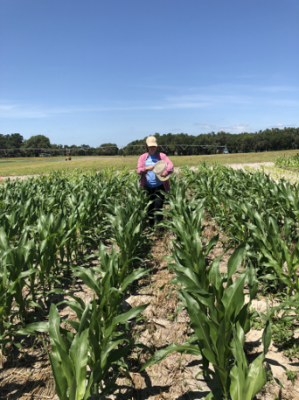 Poultry Litter Biochar Application |
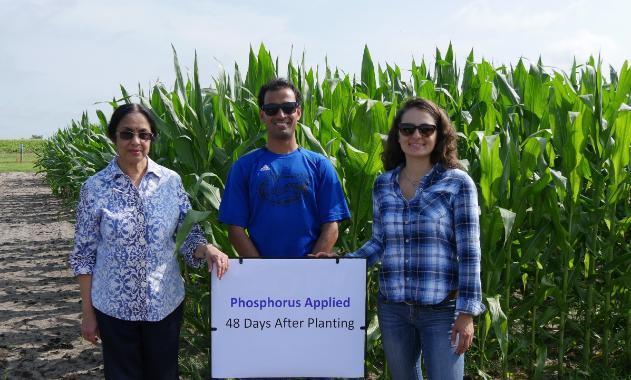 Land-application of biochar for soil and environmental management |
Oral Presentations
Selected (2023-2024)
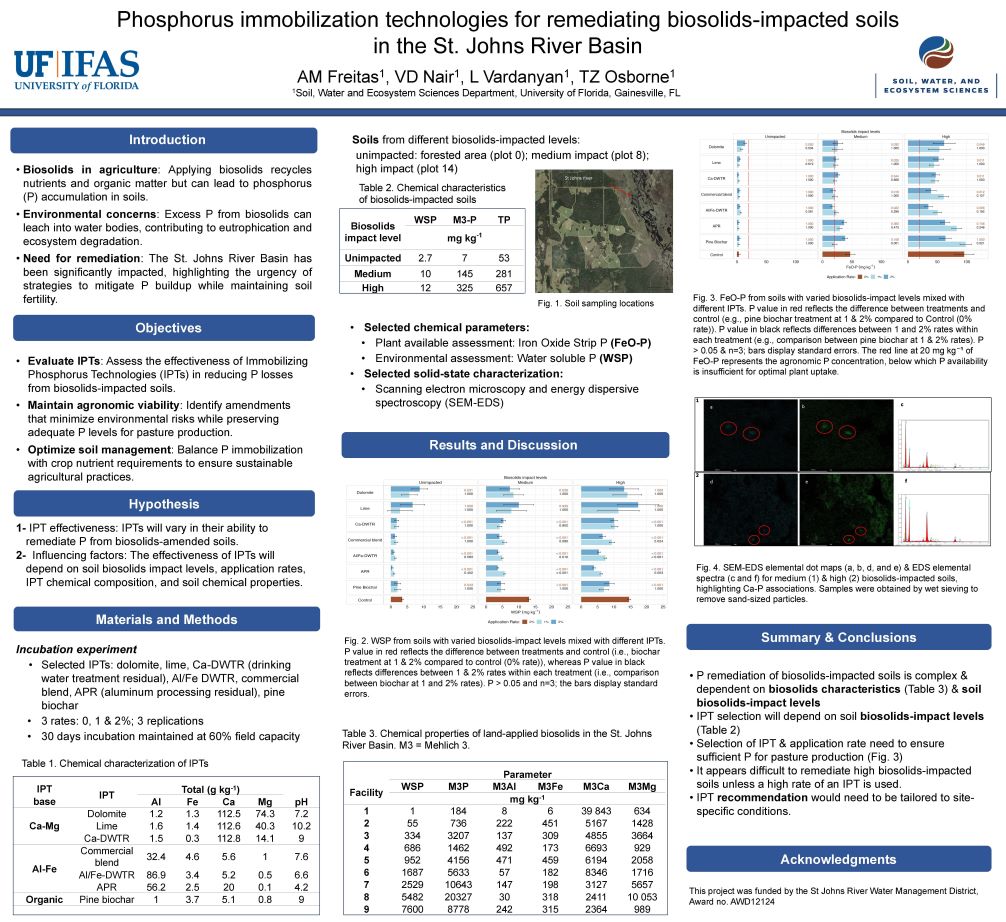
Andressa Freitas. Immobilizing Phosphorus Technologies for Remediation of Biosolids Impacted Soils. 2024. ASA, CSSA, SSSA International Annual Meeting, San Antonio, TX
https://scisoc.confex.com/scisoc/2024am/meetingapp.cgi/Paper/156887
Vimala Nair. Biochar as a Nutrient Source Under Varying Soil and Climatic Conditions.
2023. ASA, CSSA, SSSA International Annual Meeting, St. Louis, MO.
https://scisoc.confex.com/scisoc/2023am/meetingapp.cgi/Paper/148655
Manuscript Publications
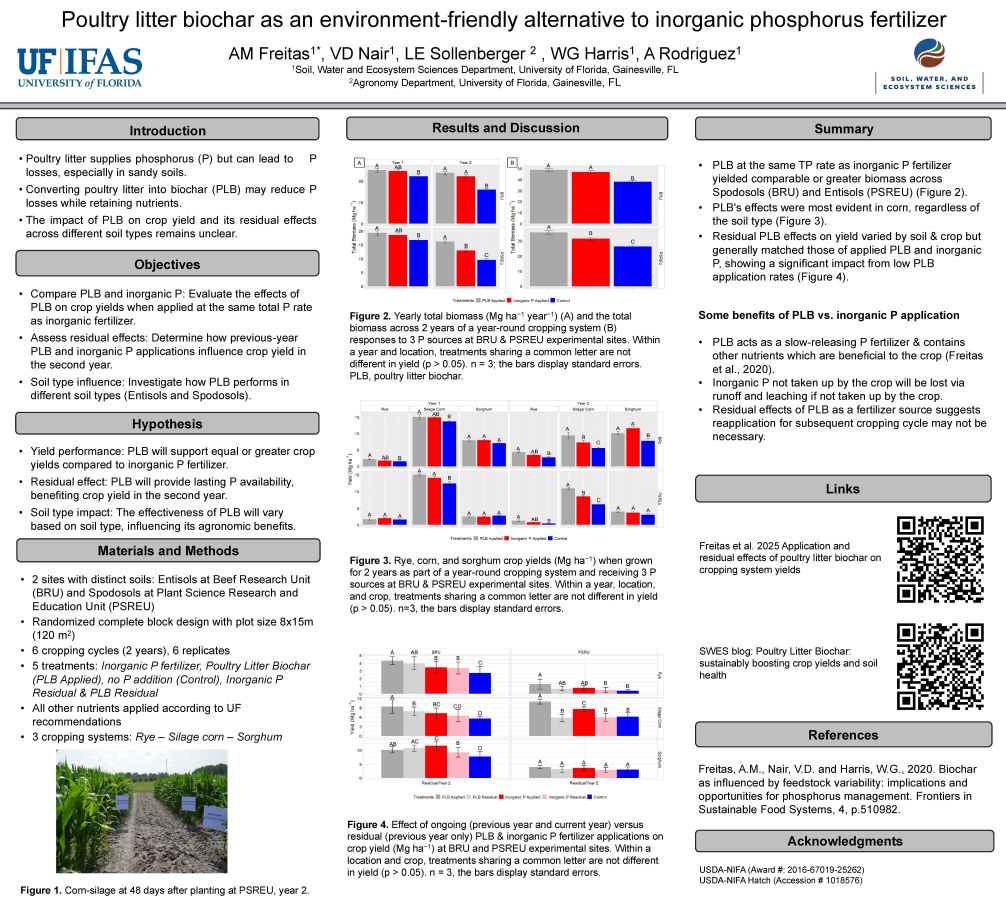
Freitas AM, Nair VD, Sollenberger LE, Harris WG, and Rodriguez AN. (2024). Application and Residual Effects of Poultry Litter Biochar on Cropping System Yields. Agronomy Journal DOI: 10.1002/agj2.21745
Freitas AM, Nair VD, Harris WG, Mosquera-Losada, MA, Ferreiro-Domínguez N. (2023). Phosphorus-induced phosphorus transformations in biosolids from diverse sources. J Environ Qual. 52(1), 13–25. https://doi.org/10.1002/jeq2.20433
Nair VD, Mukherjee A. (2022). The use of biochar for reducing carbon footprints in land-use systems: Prospects and Problems. Carbon Footprints. doi: 10.20517/cf.2022.13
Freitas AM, Nair VD, Harris WG. 2020. Biochar as influenced by feedstock variability: Implications and opportunities for phosphorus management. Frontiers in Sustainable Food Systems. 4:510982 doi: 10.3389/fsufs.2020.510982
Nair VD, Nair PKR, Dari B, Freitas AM, Chatterjee N, Pinheiro FM. 2017. Biochar in the Agroecosystem–Climate-Change–Sustainability Nexus. Frontiers in Plant Science 8. 2051 doi: 10.3389/fpls.2017.02051
Dari B, VD Nair, WG Harris, PKR Nair, L Sollenberger, R Mylavarapu. 2016. Relative influence of soil- vs. biochar properties on soil phosphorus retention. Geoderma 280: 82–87. doi: 10.1016/j.geoderma.2016.06.018
Poster Presentations
2025
Related Information
Vimala Nair. 2021. Biochar as a nutrient source in agroforestry systems. Symposium. Agroforestry Research Trust. Dartington, Totnes, UK
Google Scholar- Dr. Vimala Nair