Graduate Student Profile:
Gabriela "Bella" Reyes
When Gabriela “Bella” Reyes first joined the University of Florida as a PhD student, Dr. Ashley Smyth’s lab wasn’t fully formed. Smyth, assistant professor in the UF/IFAS Department of Soil, Water, and Ecosystem Sciences (SWES), is one of Bella’s advisors. She was just getting established at the UF/IFAS Tropical Research and Education Center (TREC), where they would work together.
“Bella was not just the first PhD student in our lab group,” Smyth recalled, “she was, in many ways, the foundation for our lab; so early that we didn’t even have space for us all to be in.”
Over her five years as a doctoral student, Bella helped shape the culture and direction of the Smyth lab. She was also active in Dr. Laura Reynold’s research lab on the UF campus in Gainesville. Reynolds, SWES associate professor, co-advised Bella with Smyth. Additionally, her academic work included a certificate in Tropical Conservation and Development. As a result of all her experiences at UF, Bella's research on urban mangroves is redefining how scientists and communities think about coastal ecosystems.
At her recent dissertation defense, titled “Mangroves in the Anthropocene: Evaluating Human and Urban Impacts on Mangrove Structure and Function,” Bella shared insights that challenge long-held assumptions about urban nature. Her work focused on the overlooked yet important role of mangroves in Miami’s urban landscape.
A native of Miami, Bella’s passion for the city’s unique coastal ecosystems runs deep. After completing her bachelor’s degree at the University of Virginia, she returned home to explore the intersections of urban life and natural systems. In doing so, Bella has become an emerging leader in urban coastal ecology.
“Mangroves provide a lot of ecosystem services or benefits to coastal communities and adjacent ecosystems,” she explained. These services include attenuating wind and waves, storing carbon, filtering nutrients, and providing habitat for wildlife. Unfortunately, the world’s mangroves are under threat.
“About 20 to 35 percent of global mangrove habitat cover has been lost due to human activity,” Bella said. “In Florida, up to 86% of mangrove cover has disappeared in some areas since the mid-20th century.”
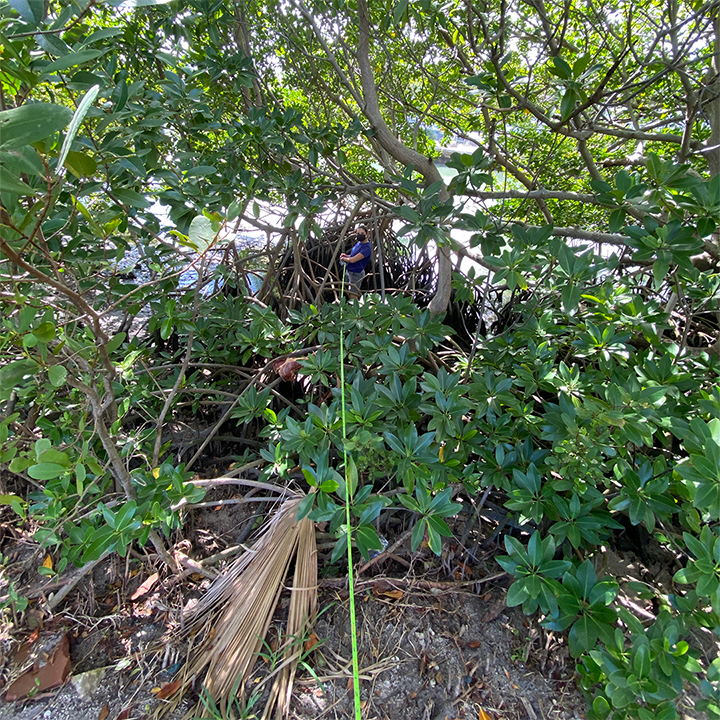
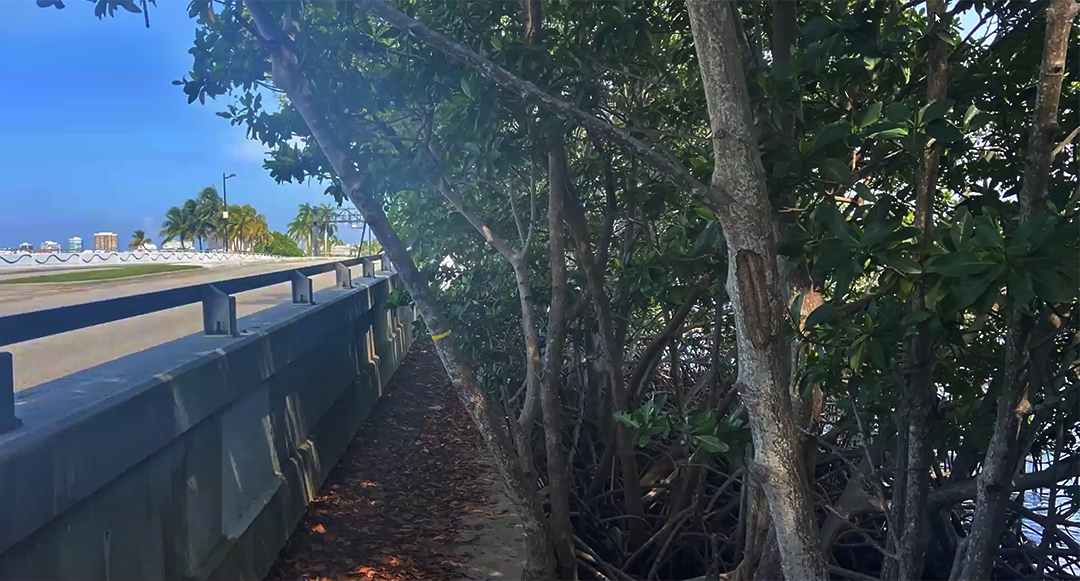
While large, pristine mangrove forests often receive attention, Bella studied the small, fragmented mangroves nestled along Miami’s canals and backyards—ecosystems often overlooked by traditional science.
Mapping What Others Missed
Early in her research, Bella discovered a gap. The Florida Fish and Wildlife Conservation Commission’s (FWC) database—the standard inventory for mangrove habitats—missed many of the small patches she knew from growing up in Miami. Determined to quantify what was missing, Bella developed a mapping approach combining federal databases, local elevation models, and hand-drawn polygons.
The result? Bella found 65% more mangrove areas than shown on the FWC database.
“These mangroves were small patches growing amongst riprap and up against people’s yards along the canals,” Bella described. Though fragmented and modest in size, they are vital. The research didn’t stop at mapping. She waded deeper into the mangrove mud to explore how urban pressures like heat, nutrient-runoff, and contamination shape these ecosystems.
“Urbanization can impact mangroves through physical disturbances, but it can also impact them indirectly through nutrients and heat,” Bella explained. “Those can change the biotic and abiotic components of an ecosystem.”
Despite being fragmented and exposed to urban stressors, Bella found urban mangroves continue to function. They store carbon, filter excess nitrogen, and provide habitat for biofouling species. (Biofouling is the accumulation of microorganisms, plants, algae, or small animals on a surface.) Even under the strain of urban life, these ecosystems are holding the line for coastal resilience.
Advocate, Collaborator, Leader, and Mentor
Along her PhD path, Bella was advancing science as well as encouraging the people around her. Dr. Smyth said Bella was a leader in the lab and generous with her time and talents.
“She mentored at least five interns that I could count—there may be more—not to mention the countless other graduate students and technicians who’ve been through our lab,” Smyth noted.