Alumna Spotlight:
Allison (Leapard) Hammer, M.S. 2016
Allison Hammer earned her master’s in soil science through the Department of Soil, Water, and Ecosystem Sciences’ (SWES) online program in 2016. Today, she works as a GIS specialist with the USDA Farm Production and Conservation Business Center. She also teaches at Virginia Wesleyan University, where she’s inspiring the next generation to understand and care about soil. We spoke with Allison about her career path, her experience as an online student, and her passion for promoting soil science.
A Natural Fit
Q: How did you come to UF, and what made you choose soil science for your master’s degree?
A: I kind of fell into soil science. During my last year of undergrad, my alma mater had alumni come speak about grad school and work experiences. One alum talked about grad school at Old Dominion University, and it made me realize I wanted to keep learning—but I had two small kids and couldn’t do an in-person program.
So, I started looking into online programs. I narrowed it down to Virginia Tech and UF. I’d already done my associate's degree online through Florida State College at Jacksonville and knew I could handle the structure. SWES had more detailed information on its website, so I applied and got in.
I also landed an internship with the USDA Natural Resources Conservation Service (NRCS) the summer before grad school started, not even knowing what NRCS was at the time! Everything just really fell into place.
Q: Were you exposed to soil science in your undergraduate studies?
A: Not much! That’s the case in many environmental science programs, from my experience. You might get a week or two on soil, but rarely a semester-long class. Reading about the soil courses SWES offered really intrigued me because I just didn’t know much about it. Looking back, I feel fortunate that I ended up here.
Q: Why pursue a master’s degree at that point?
A: I just love learning. I knew there was so much more to understand beyond my undergrad knowledge. I applied to grad school before I got the NRCS internship, but I think I would have ended up doing both eventually. It’s becoming the norm at USDA to have a master’s degree, so I’m glad I did it when I did.
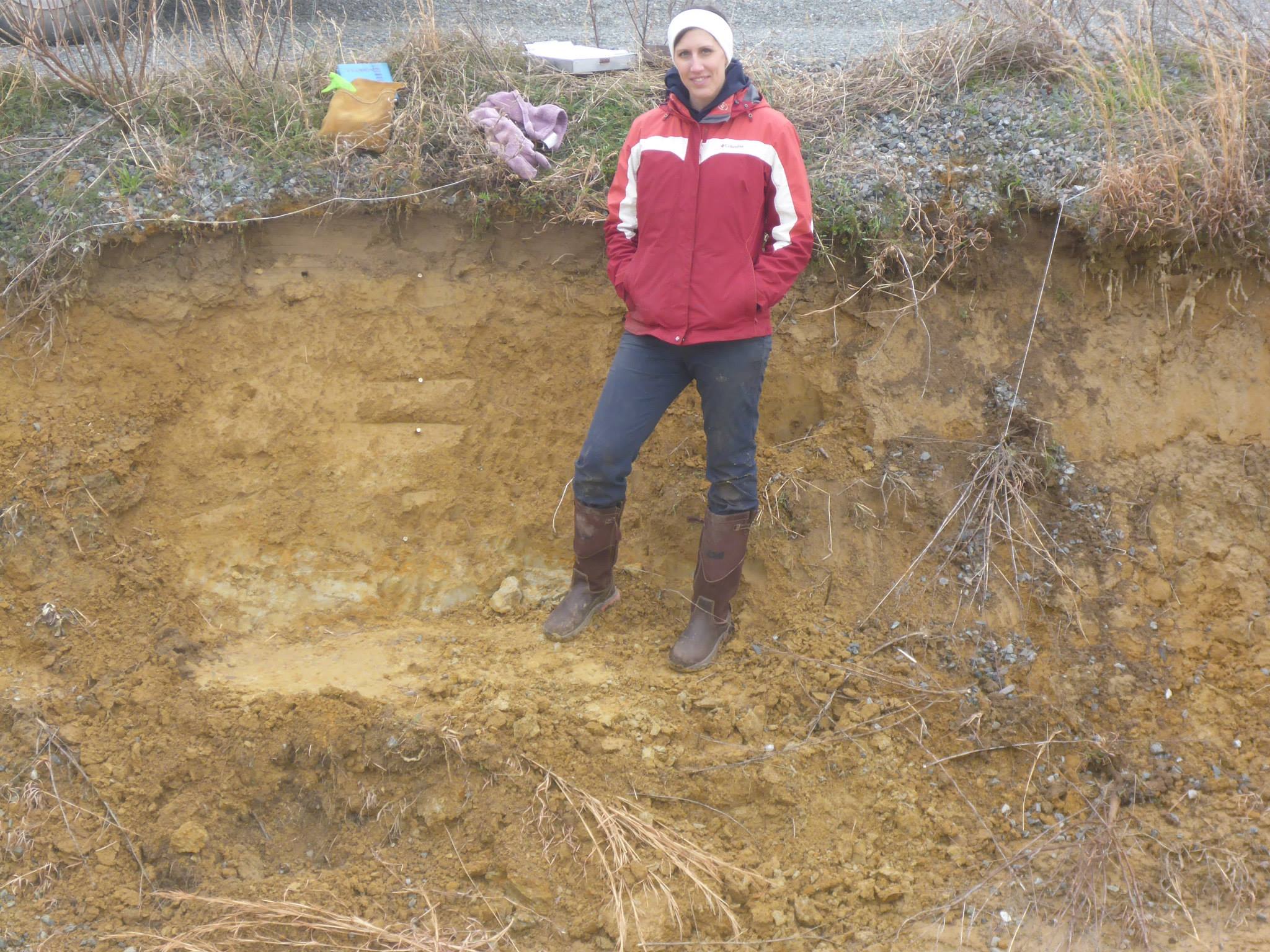 Allison in 2015, describing a soil profile for her SWES pedology class.