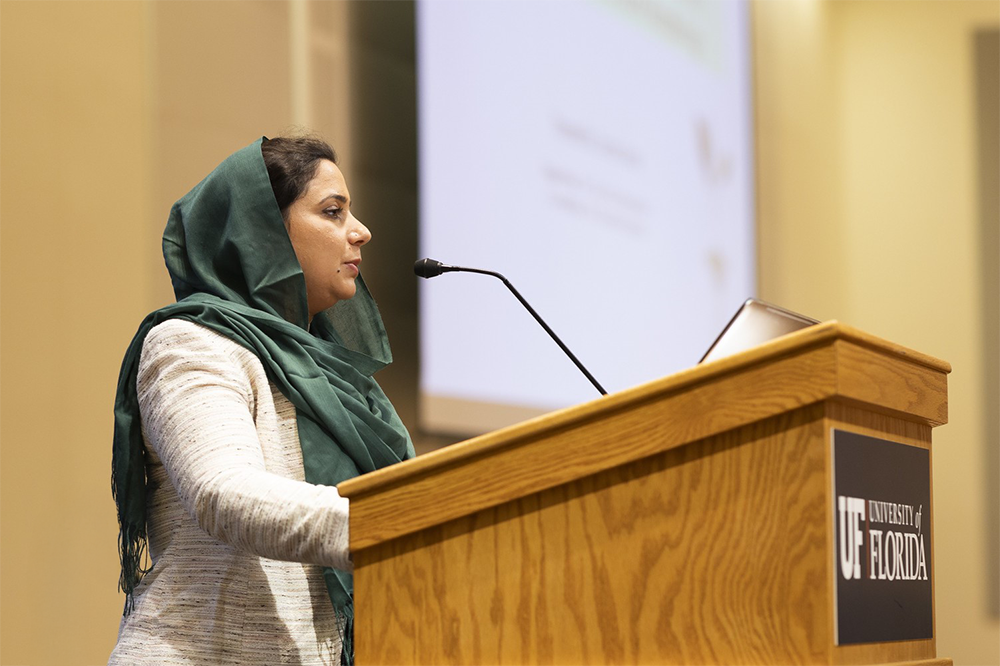
“Florida producers rely heavily on groundwater for irrigation, but that overuse is leading to a decline in both quantity and quality,” Yasmeen explained during her presentation at this year’s SWES Research Forum. “We’re looking into alternatives, specifically, reclaimed water as a more sustainable option.”
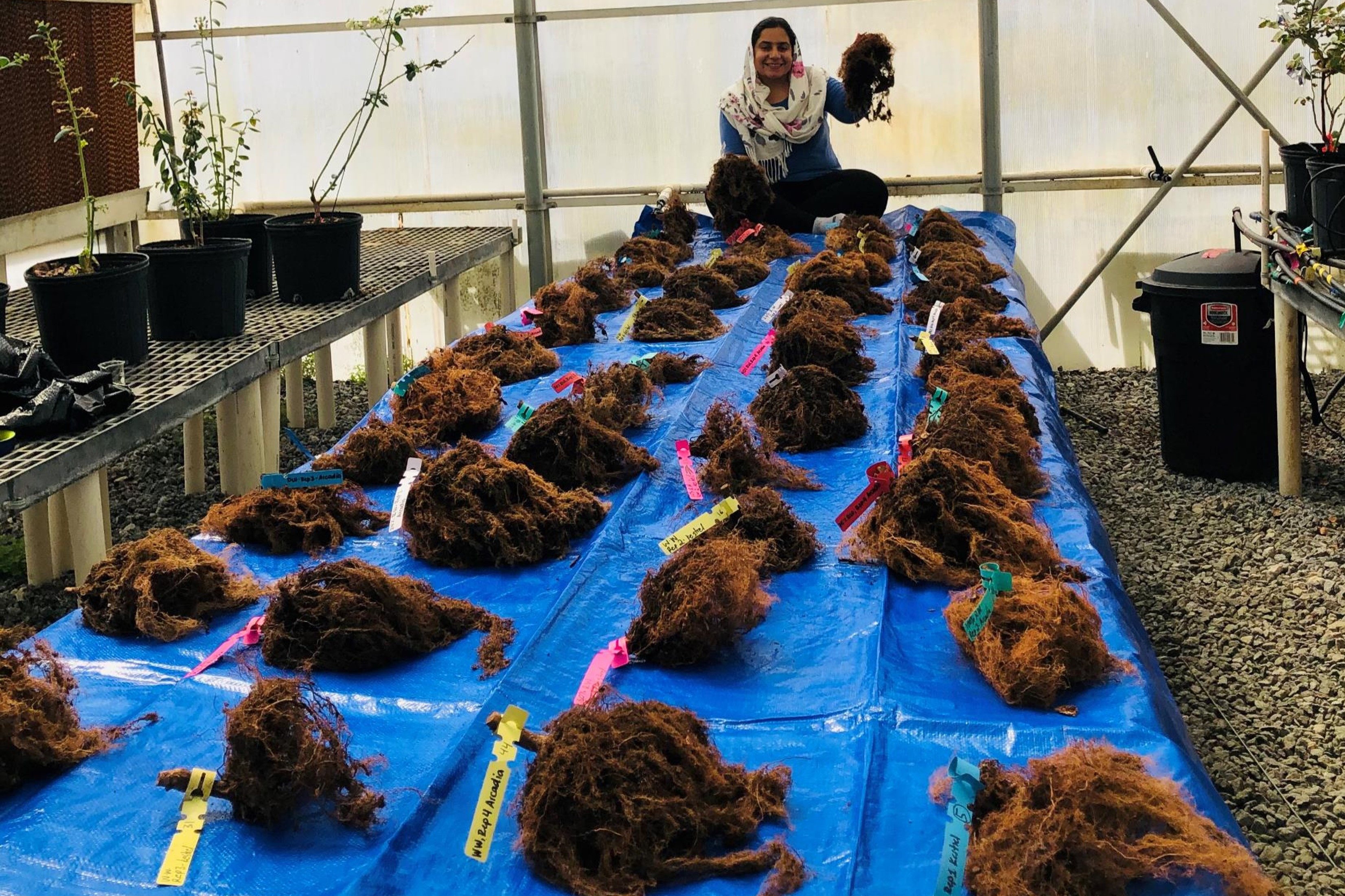
Yasmeen has conducted six experiments focused on both plant growth and environmental outcomes. One greenhouse experiment at CREC evaluated how blueberry seedlings respond to reclaimed water and sodium chloride (NaCl)–induced salinity. Two experiments at GCREC explored root system development using rhizotron imaging and the interaction between biochar amendment and reclaimed water on seedling growth. At UF’s Gainesville campus, she performed two additional studies to assess nutrient and heavy metal leaching in blueberry substrates under reclaimed water irrigation, including one that tested novel biochar layering strategies. Her most recent project, conducted at Kyoto University, investigates nutrient sorption dynamics in biochar-amended substrates under simulated Florida reclaimed water irrigation.
Yasmeen received several awards throughout her doctoral journey in recognition of her academic excellence and research contributions. Most notably, she was honored with a prestigious “Research Abroad for Doctoral Students (RADs) grant” award that supported her sixth and final research project at Kyoto University in Japan. This recognition reflects her outstanding accomplishments in the field of sustainable horticulture and underscores the global relevance of her work.
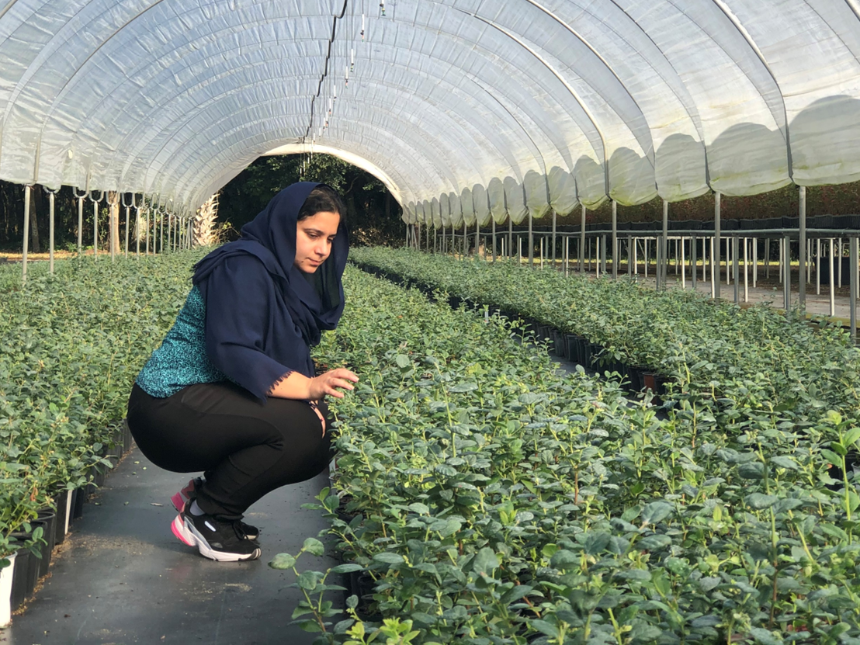
Her research, advised by Dr. Davie Kadyampakeni and conducted in collaboration with Dr. Shinsuke Agehara, uses the ‘Arcadia’ cultivar; a popular Southern Highbush Blueberry (SHB) variety grown in Florida. “Blueberries are sensitive to salts and require an acidic substrate. Reclaimed water often has higher salinity and pH, so the challenge is finding ways to mitigate those effects,” Yasmeen explained.